How can I help protect turtles?
Volunteering & Travel Advice / 20 November 2026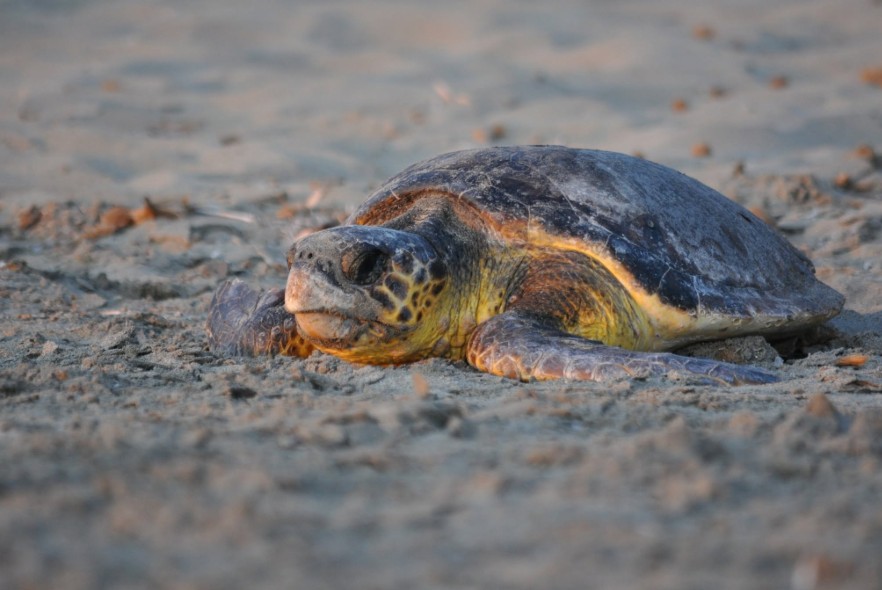
We chat to Gemma, a travel expert and passionate conservationist at Pod Volunteer about how to help protect turtles:
I adore turtles and I’ve been lucky enough to visit turtle conservation projects across the globe in Costa Rica, Sri Lanka, Malaysia and Greece. The more I learn about turtles the more I find them absolutely fascinating!
It is incredible that newly hatched female sea turtles can memorise their hatching location through the Earth’s magnetic field, chemicals and visual cues to navigate back to the same beach area years later to dig their own nest.
At night during nesting season, turtles approach the beach to find a suitable place to lay eggs in the sand. They dig a deep hole and an egg chamber where they lay their eggs, called a clutch. Each species of sea turtle has different traits. Different species can lay between 60-150+ eggs in each clutch. They can lay between 2 or 5 clutches of eggs each nesting season, and typically nest and lay eggs every 2-4 years.
Once the eggs are laid the turtle returns back to the sea. The eggs take between 45-65 days (depending on the species and the sand temperature) before they hatch. Warmer incubation temperature leads to more females hatching, while cooler sand leads to more male hatchlings.
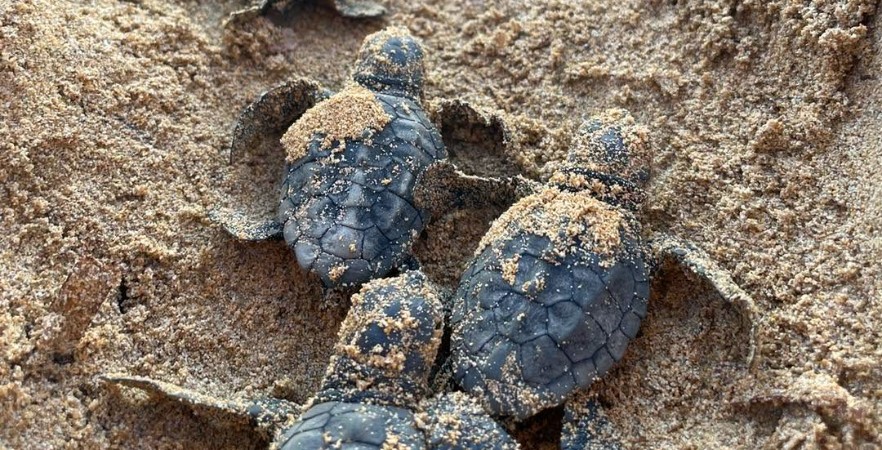
Rising global temperatures are causing some populations to skew towards more female hatchlings as well as extreme heat sometimes also causing embryo development issues.
Sadly the survival rate for hatchlings to become an adult is very low, at between 1 in 400 and 1 in 2000 that survive to adulthood. This is due to both natural and human threats. Before they even hatch, nests can be destroyed by predators such as mammals, reptiles, birds and insects. Climate change and severe weather is causing nesting beaches to erode as well.
Human impact such as fishery by-catch, habitat loss from coastal developments and pollution are causing great pressures on turtle populations.
Therefore, turtles need all the help we can give them to have a better chance to survive! So the questions is, how can I help?
There many ways you can help protect and conserve turtles:
Plastic pollution
- Rubbish - Never litter - take all your own rubbish home and recycle it
- Single use - Cut down on your single use plastic every day – as a lot of plastic ends up polluting the oceans!
- Start a hobby of a mini beach clean on every beach visit – helping to remove rubbish from the beach means less plastic will be washed out to sea which could be eaten or harmful to ocean creatures! Turtles can mistake plastic bags for food and can often get tangled up in kite strings, six-pack rings, and fishing lines
- Never release balloons outdoors - Balloons that are released into the air often find their way to the ocean are choking hazards for many types of marine life, including sea turtles.
Nesting beaches
- Keep beaches dark at night – You should avoid being on the nesting beaches in the evening as it can scare off nesting turtles. You should turn off outdoor lights, avoid camera flashes and use only red LED lights when necessary so turtles aren't disoriented
- Keep the sand natural – After a day on the beach you should knock down sandcastles, fill in holes, and take everything away with you, as these could stop a turtle nesting
- Don’t disturb nests!
Turtles and hatchlings
- Do not feed - Feeding harms their health, often causes buoyancy issues and disrupts their natural foraging and migration
- Do not touch - Never touch their shells as this causes stress, risks spreading harmful bacteria and infections, and is often illegal
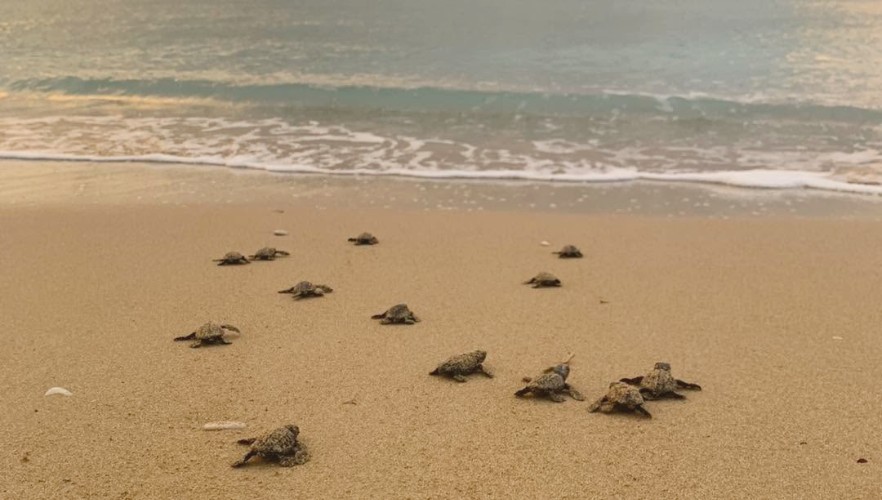
- Hatchlings - If you see hatchlings, stay quiet, move slowly, and never touch, block, or move nesting turtles or hatchlings
- Report sightings or injuries: - Alert local wildlife authorities or rescue centres if you spot an injured turtle, nest, or disoriented hatchling
- Drive carefully - Drive boats and jet skies carefully to avoid hitting turtles who are surfacing in the water
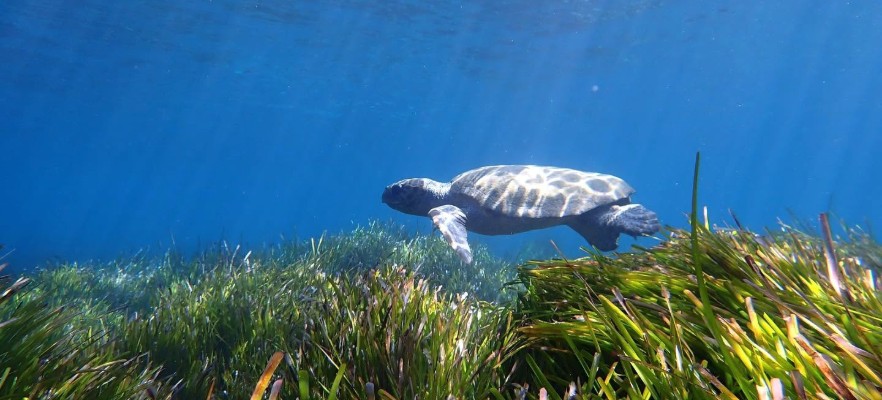
- Swimming with turtles - If you are lucky enough to see turtles whilst in the sea, remember to respect their space and let turtles swim freely without chasing them
Turtle Conservation holidays
If you would like to join a Turtle Conservation trip overseas to help research, conserve and protect endangered sea turtles then Pod Volunteer has a range of options you can consider joining:
- Turtle Conservation in Costa Rica
- Turtle and Wildlife Conservation in Costa Rica
- Turtle and Wildlife Conservation in Costa Rica - Family Trip
- Turtle Conservation in Greece
- Turtle and Marine Conservation in Greece
- Bird and Turtle Conservation in Greece
- U18 Summer Turtle and Marine Conservation in Greece (16/17 years old)
- U18 October Turtle and Coastal Conservation in Greece (16/17 years old)