Turtle Conservation
Costa Rica
The Turtle Conservation team in Costa Rica protect and conserve the sea turtle populations and work closely with the local community to educate them on the importance of conserving turtles.
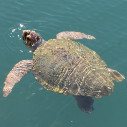
You will assist the local team by patrolling the beaches to reduce the likelihood of the eggs being taken by animals or members of the community, relocating nests until they hatch and collecting data. Olive Ridley turtles, the species most frequently found in the area, are categorised as ‘vulnerable’ accordingly to the IUCN Red List, so their protection is vitally important. Volunteers enable more night patrols to occur, which has led to a drop of around 80% in the number of nests that have been taken in the area.
Immerse yourself in a beach vibe and experience a beautiful ‘off the beaten track’ part of Costa Rica.
Join an active conservation team to help protect endangered sea turtles.
Key Info

- Location: Nicoya Peninsula
- Start dates: 1 July - December, any day
- Duration: 1 – 12 weeks
- Age requirement: 18+ (5+ for families)
- Availability: Spaces available
- Cost: From £995 / €1155 / $1295 - see Dates & Fees
Project Information
Volunteer role: What will I be doing?
The project monitors and protects sea turtle populations by patrolling the beaches to reduce the likelihood of poaching and placing eggs in safe hatcheries until they hatch and are released into the ocean. The team have protected and released hundreds of thousands of hatchlings!
Olive Ridley turtles, the species most frequently found in the area, are categorised as ‘vulnerable’ accordingly to the IUCN Red List and their protection is vitally important.
Volunteers help to monitor and maintain the hatcheries, enable additional patrols and assist with the collection of data about nesting turtles which is used to gain an understanding of sea turtle reproductive behaviour and improve their conservation strategies in the future.
There are two main volunteer roles, night patrol and hatchery duty:
Night patrol
Turtle eggs are a valuable commodity and beach patrols reduce the likelihood of eggs being taken by members of the local community or eaten by animals. As Olive Ridley turtles nest primarily after dark, you will assist a member of the team on a 2-3 hour shift during the evening / early morning. Volunteers are allocated shifts to ensure a continual patrol of the beach can take place from 7pm to 7am.
Night patrols involve:
- Walking along the length of the beach to look for adult female turtles who are making their way to land in order to nest
- Collecting data on turtles (if encountered) and collecting the eggs to be relocated to a different part of the beach or the hatchery
Hatchery duty (see seasonal variations below)
Turtle hatchery duty involves:
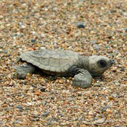
- Monitoring the hatchery site at regular intervals to check for any new baby turtles which have hatched. This is an incredible experience as there are often around 100 hatchlings in a single nest!
- Recording data on the number of new hatchlings and then releasing them into the ocean
- Nest excavations - examining contents of the nest to count the number of eggs and unborn or underdeveloped turtles
- Maintenance of the hatchery
Other roles
Once a week there is some time set aside to help clean the field station and all the equipment used. There is also usually a team meeting this day.
Every few weeks, the team do community outreach activities with the local school or members of the community which you can take part in, if it takes place during your stay.
Seasonal variations
Here is a summary of what happens each month:
- July: preparation and building the hatchery, night patrols with relocation of nests on the beach (until the hatchery is ready)
- August: night patrols with relocation of nests to the hatchery, checking hatchery
- September to mid-October: night patrols with relocation of nests to the hatchery, checking hatchery day & night, releasing hatchlings
- Mid-October to mid-December: night patrols with relocation of nests on the beach, checking hatchery day & night, releasing hatchlings, hatchery removal in mid-December
Hatchlings usually appear in the hatchery from September until the end of the turtle season in mid-December. Nesting normally peaks during the wet season in October and this is when the most adult turtles are generally seen as well as hatchlings.
There can also sometimes be “Arribadas” or mass nestings in September / October on one of the beaches in the area, an incredible event to witness, where thousands of turtles come to nest at the same time on the same beach!
You can join this project for 1 week, but if possible we recommend staying for 10 days+ as turtle activity fluctuates and this increases your chances of seeing a nesting turtle / hatchlings.
Typical day
In your first few days, you will be given an induction to the project and the work rota. You will also receive training on how to complete tasks such as digging turtle nests and releasing hatchlings.
Volunteers work 6 days per week. The majority of nesting and hatching takes place after dark so alot of the volunteer role takes place at night. Work timings vary with shifts:
- Night patrols take place every evening between 7pm and 7am (depending on the tides) and volunteers will be given a shift of 2-3 hours, including breaks
- Hatchery shifts are generally 3 hours long and can be scheduled during the day or night
The schedule is designed to give rest time after the night work, so there is plenty of free time during the daytime, when you can catch up on sleep and enjoy the stunning beach location. You can try out surfing at the surf school next door or there are other activities available nearby such as horse riding and river or mangrove tours.
Other volunteers
There are usually 2-5 volunteers, numbers vary throughout the year. There may also be groups visiting, although they don't stay at the field station.
Duke of Edinburgh’s (DofE) award
This placement has been approved by the DofE as meeting the requirements for the Residential section of the Gold Award.
Local support
You will be working alongside the local team which is made up of local and international staff and research assistants. There is a volunteer coordinator based at the field station with you.
“By having volunteers, work load can be spread more evenly ensuring maximum time spend patrolling the beach which leads to decreased numbers of nests being poached.” Lotti, Manager
Accommodation
Volunteers stay at the field station which is a lovely house right by the beach!
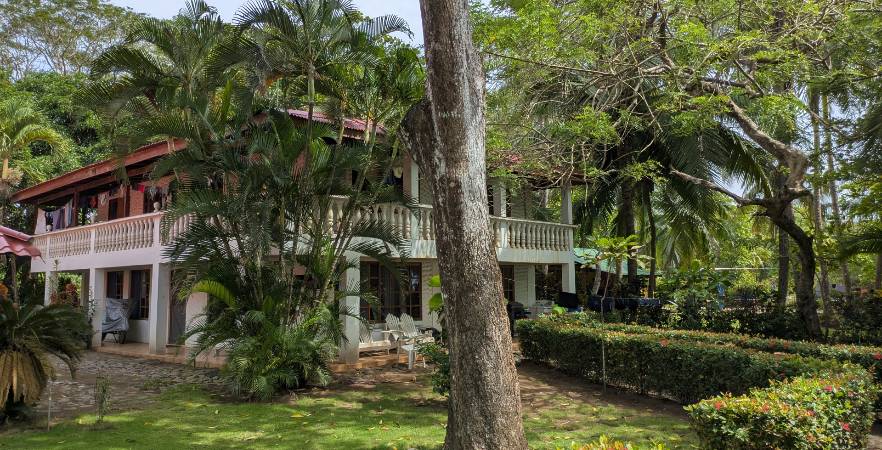
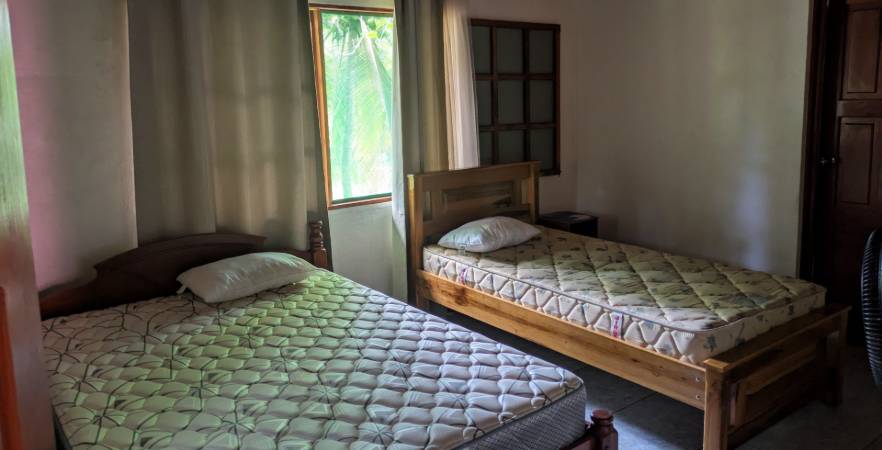
There are 3 shared bedrooms for volunteers, each room has a fan and simple storage. Bathrooms are shared. Members of the local team live at the station with you, including your volunteer coordinator.
There is a well-equipped kitchen and a dining / relaxing area, for eating and socialising in.
Outside, there is a tropical garden which runs down to the edge of the beach, a nice place to rest in a hammock during the day after a busy night's work. There are often lizards and birds to spot too!
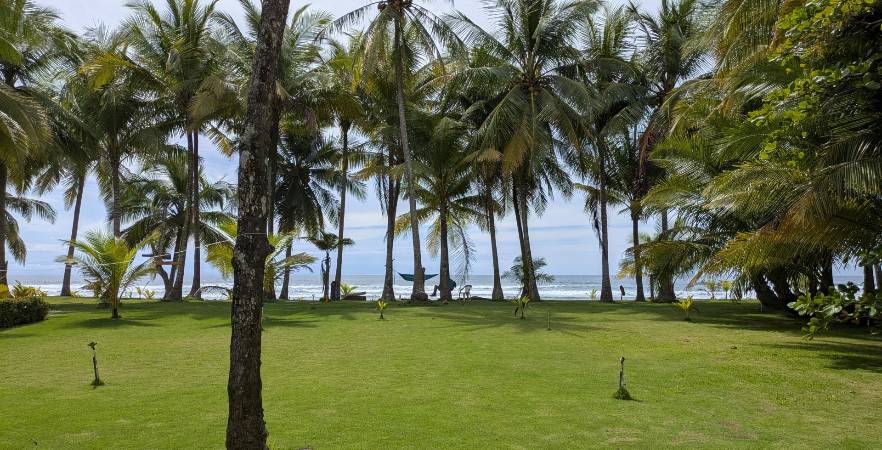
There is WIFI available but it can be limited so it's useful to have internet access though your phone too.
Meals
Volunteers are provided ingredients to prepare their own breakfast. Lunch and dinner are prepared by a member of the local community who comes to the field station and makes a large meal which is eaten for lunch and dinner.
Here are typical examples of the food you will have:
- Breakfast – eggs, pancakes, bread, cereals, fresh fruit
- Lunch and dinner – traditional rice and beans, meat, lentils, potatoes, pasta
Vegetarian and vegan options can be provided.
The tap water in Costa Rica is safe to drink and can be kept cool in the kitchen fridge.
Getting there
You will need to fly into San Jose (SJO) or Liberia (LIR). If flying into San Jose, you will normally need to spend one night in San Jose and transfer to the project the next morning. We can arrange an arrival and departure package (including pick up, hotel and transfers) or a private transfer for you.
Location
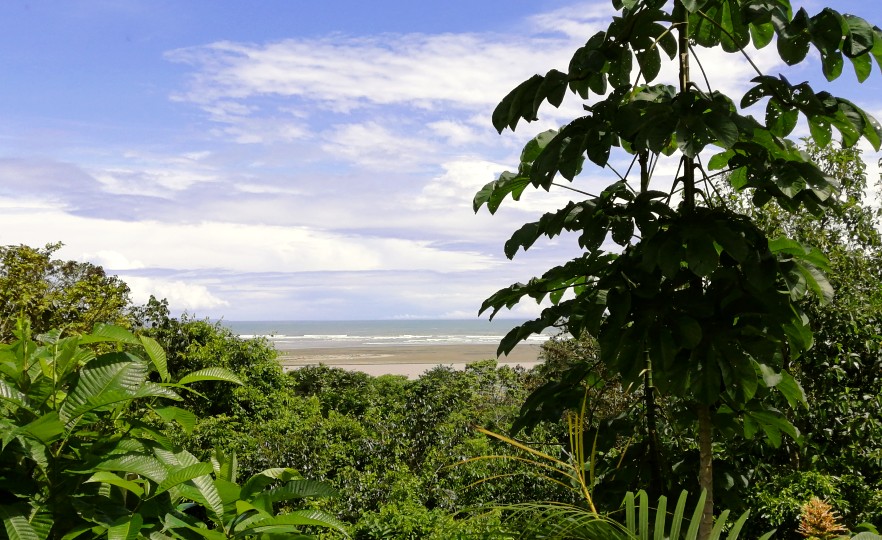
The project is based in the Nicoya Peninsula on the west coast of Costa Rica by the Pacific Ocean. This is the largest peninsula in the country and is a great location for experiencing an ‘off the beaten track’ escape. The area is only just being discovered by tourists and comprises a wonderful combination of rugged mountains and stunning beaches.
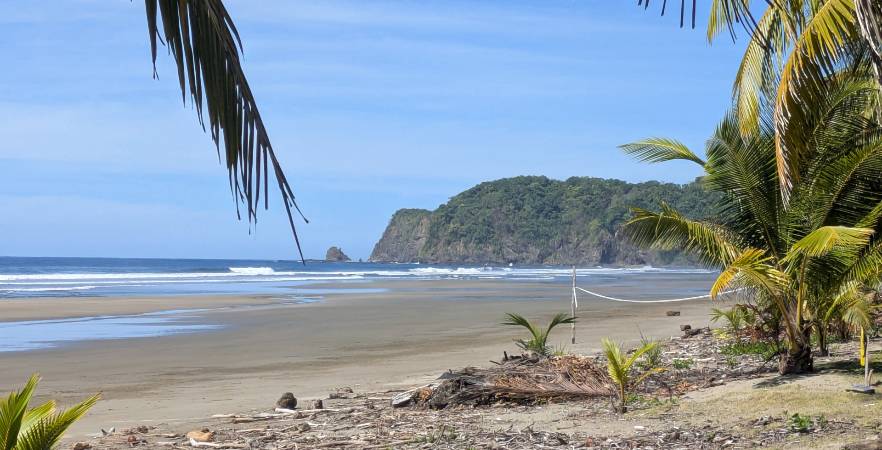
Free time
A significant part of the volunteer role is at night, so you have plenty of free time in the day between your allocated shifts and you also have one day off per week. During your free time you can relax in a hammock in the garden or you may like to play football and volleyball with volunteers, staff and locals - there is a big community football match on the beach most afternoons!
There is a fun and friendly surf school right next door so a great opportunity to learn to surf or develop your skills on the waves of the Pacific.
The local team can assist you with organising activities. Popular choices are:
- Gastronomic tour
- River tour
- Mangrove tour
- Hiking tour
- Horseriding tour
- Fishing tour
- Butterfly garden
- Macaw recovery center
Climate
The Nicoya Peninsula has a tropical climate. Temperatures are warm throughout the year and average between 20-30˚C but due to the humidity (80%+) it can feel much warmer. There can be tropical rain showers at any time of year but the main rainy season is from August to December and the heaviest rainfall is usually from September to November.
Travelling in Costa Rica before or after your placement
Popular activities in Costa Rica that you might like to combine with your project are:
- Visit the spectacular Arenal Volcano and relax in a hot spring
- See incredible biodiversity and birdlife in Monteverde Cloud Forest
- Exploring and looking out for wildlife in Manuel Antonio National Park
For more information on Costa Rica and some of the things we loved when we visited there please see our Costa Rica country page.
Arrival & departure
- Start day (day to arrive at the project): any day, see available start dates below
- Departure day: varies depending on start day and duration
Durations
You can volunteer at this project for: 1 week, 10 days, 2 weeks - 12 weeks (7 nights per week).
Start dates
You can start on any day between 1 July and mid-December.
What's Included
Included
- Dedicated Pod Volunteer specialist to support you from booking on until you complete your trip
- Comprehensive trip planning guide
- Accommodation - shared room
- Meals at the field station - breakfast, lunch and dinner
- Induction and training
- Support from the team onsite in Costa Rica
- 24/7 emergency support from the Pod Volunteer UK team
- Donation to Pod Environmental Fund tackling climate change
- 100% payment protection through ABTOT
- Volunteering certificate and reference (on request)
Not included
- Flights
- Transfers to / from the project (we can arrange this for you, see below)
- Travel insurance
- Vaccinations
- Any tourist trips / activities you choose to do in your free time
Price table
| 1 week | £995 | GB Pounds |
| 10 days | £1395 | GB Pounds |
| 2 weeks | £1795 | GB Pounds |
| Extra weeks | £795 | GB Pounds |
| Arrival package per person | £195 | GB Pounds |
| Departure package per person | £195 | GB Pounds |
| Private transfer (each way) | £300 | GB Pounds |
Arrival and departure package (optional)
There are a few different options to get to the project. We can organise an arrival / departure package, a private transfer, or you can travel independently.
The arrival package includes:
- Airport pick up (San Jose)
- 1 night at a hotel in central San Jose in a private room
- Pick up from the hotel the next morning and transfer by car to the bus station
- Bus ticket for bus journey to the nearest main town to the project - around 5.5 hours
- Pick up from the bus stop and transfer by car to the project field station where you will be met by the local team
The departure package includes:
- Transfer by car from the project field station to the bus stop in the nearest main town to the project
- Bus ticket for bus journey to San Jose - around 5.5 hours
- Pick up at the bus station in San Jose and transfer by car to a hotel
- 1 night at a hotel in central San Jose in a private room
- Pick up from the hotel the next day and transfer by car to the airport
The private transfer cost covers a vehicle for up to 6 persons and can be from / to San Jose airport or your San Jose hotel.
Discounts
- £250 discount for each child under 16 joining with parent(s)
- £50 discount if you have previously volunteered with Pod Volunteer
Where the money goes - financial transparency
Your fee covers the overseas costs of volunteering and the costs of running our organisation in the UK, on a non-profit basis. For more details and a breakdown of our costs please click here.
Book with confidence - financial protection
All monies paid to us are financially protected through The Association of Bonded Travel Organisers Trust Limited (ABTOT).
Fees in currencies other than GBP are indicative only and volunteers are invoiced in GBP. For current exchange rates please see www.xe.com
Read volunteer reviews from the Turtle Conservation project
Melissa
“My experience at the turtle conservation programme in Costa Rica was unforgettable. The beach was amazing and the scenery was very beautiful. It was very exciting to be working closely with the turtles and it felt very rewarding to release the hatchlings into the sea.
The locals and volunteers were friendly and the staff working at the project were helpful and supportive. I would definitely recommend this programme to anyone who wants to volunteer. It has been the best decision I have made as it has been worthwhile and I learnt a lot about the Costa Rican culture!”
Sam
“I loved helping the turtles and being able to feel good about building the hatcheries. All of the volunteers were really nice and I learned so much. Paintings signs for the beach and getting to swim in the ocean was great. Helping the turtles after they laid eggs and watching the other volunteers finding turtles was one of the coolest experiences ever.”
Anne
“My volunteering placement with the turtle project in Costa Rica was all I had hoped for and more. From the beginning, Pod gave me excellent support in answering the questions I had about the placement and how to prepare for it. They contacted me at the strategic points in the planning process to check that all was well and ask if I had any further questions and were always responsive and helpful when I did.
My overall experience was excellent and exceeded when I was fortunate enough to witness an arribadas (mass nesting) just up the coast within the first few days of being at the project. A truly once-in-a-lifetime experience!”
Christin
“What a humbling experience to be able to help by giving these amazing animals a little bit of a head start by saving the turtle eggs so they are protected from poachers and predators.”
Savannah
“I will never forget being able to see the milky way the first time I ever saw a sea turtle on the beach. I will also never forget being able to catch turtle eggs while she was laying them. During my down time, I was able to draw a mosaic picture of the four turtles that come to shore. I was also able to play volleyball with the locals, read and just enjoy the natural environment.”
Brandy
“I had an absolutely delightful experience at the Turtle Conservation project. A gorgeous beach, nice accommodations, good food, and great group of people. I've worked as a research assistant at a loggerhead turtle nesting site, so I've had a similar experience.
But the joy of seeing these tiny Olive Ridley hatchlings make their way to the ocean, overcoming the surf and fighting for survival is something I could experience many times over with equal emotional impact.”
Barbara
"From beginning to end a truly amazing experience. Everybody here makes you feel welcome and part of the team. Thank you so much.“
Angus
“I had a great time, as well as the once in a lifetime opportunity to see an Arribada! Overall a great experience.
Seeing the baby turtles hatch and make their way into the sea made all the late nights and long patrols worthwhile! I had a fantastic time - would recommend!”
Matheus
“The project allowed me to live one of the best experiences. Helping to save the turtles is a very rewarding thing, this awakened even more my responsibility to the environment.”

24/7 support
Alex and the Pod UK team are here to help y
Reserve your place and start your volunteering adventure to Costa Rica!
BOOK NOWSIMILAR PROJECTS
Here are other popular projects you may be interested in