Elephant Care and Research
South Africa
The Elephant Care and Research project studies the biology, behaviour and husbandry of their elephants with the aim of enhancing the welfare of captive and wild elephants throughout South Africa and internationally.
Volunteers work closely with the elephant herd who live in the park to create and provide enrichments for them. You will help the team to monitor the elephants throughout the day, gaining important insights into all aspects of the elephant’s life which contributes to vital research for the magnificent species.
Become part of the team to help collect data and care for the elephants.
Live on the famous Garden Route which is ideally located close to the stunning coastline, wildlife reserves and vineyards of South Africa.
Key Info

- Location: Western Cape
- Start dates: Every Sunday
- Duration: 1 - 12 weeks
- Age requirement: 17+ (12+ for families)
- Availability: Spaces available
- Cost: From £995 / €1155 / $1295 - see Dates & Fees
Project Information
Volunteer role: What will I be doing?
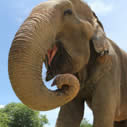
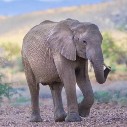
Join the local expert team to care for and research their herd of 5 African elephants, which includes relocated elephants, orphaned calves and elephants rescued from situations such as culls. The elephants live in a 180 hectare park where tourists visit daily to interact with the elephants on educational elephant tours, feeding and walks.
The elephant project offers a unique insight into elephants and the chance to work closely with these magnificent African elephants who are in vital need of conservation. You can learn more about the project here.
The experience is very interactive, allowing you to be in close proximity to the elephants. You can walk alongside them and participate in feeding sessions. However, direct contact with the elephants is typically restricted to prioritise their well-being and provide them with as much freedom as possible.
Volunteers joining the project for 1-2 weeks focus on learning about and observing elephant behaviour and interactions alongside a trained team member. This is more of an educational opportunity, learning about the elephants and the research carried out while of course getting to see the amazing ellies!
Volunteers who are able to join for 3 weeks or longer receive additional training and familiarisation needed to collect data and observe the elephants, allowing them to contribute directly to the research.
All volunteers receive elephant information and talks and are involved in a range of tasks, including:
- Preparing and distributing fruit, vegetables and elephant enrichments to encourage wild foraging behaviour
- Elephant identification
- Field observations of the elephants - during the day and at night
- Walking with the elephants
- Data entry
- General maintenance - collecting or clearing branches, cleaning of elephant pens, water troughs and other areas, maintenance and painting
- Creating crafts such as elephant dung paper, recycled rubber elephant keyrings to sell to raise funds for the project
Volunteers who stay for 3 weeks may also help with:
- Monitoring and recording the elephants’ social interactions (how they interact with each other) and behaviour (grazing, drinking, playing, dusting and walking)
- Monitoring and recording interactions between elephants and tourists
- Dung collection and analysis for health checks
- Data analysis
- Environmental education with the community
- Weekly monitoring of the zebra herd who live in the park
Volunteers staying longer than 3 weeks may learn further research techniques and take on additional responsibilities.
Typical day
Volunteers normally work 4.5 days a week with Friday afternoons and weekends off. Generally volunteers start around 7am and finish at 5.30pm with breaks and lunch. In your first few days you will be given an introduction to the volunteer role, research and the elephants.
Volunteers staying 3 weeks + may also take part in specific weekend, early morning or night roles, such as night time elephant observations.
Volunteers live on site which is a short walk from the elephants. There are many exciting free time activities locally including the famous Garden Route. You will you join the team for a traditional South African braai (bbq) too!
Other volunteers
There are usually 3-8 volunteers (with a maximum of 12), numbers vary throughout the year.
Duke of Edinburgh’s (DofE) award
This placement has been approved by the DofE as meeting the requirements for the Residential section of the Gold Award.
Local support
You will be working alongside the local team of local and international staff including researchers and guides. There is a volunteer coordinator who will be you main contact and there to support you throughout your time at the project.
“Without volunteers, many of our research projects and husbandry duties like providing enrichment for the elephants wouldn’t be accomplished. By having trained volunteers in the field monitoring them we can see on a daily basis the changes in behaviour and health.” Christina - Lab Technician
Accommodation
The volunteer accommodation is located within the elephant park. Volunteer rooms are shared with 2-3 volunteers on a same sex basis. Each comfortable shared bedroom has an en-suite bathroom with a toilet and shower.

There is a fully equipped kitchen in the house for volunteers to prepare food and there is a dining area, terrace and living room where volunteers can socialise. There is WIFI internet access at the volunteer accommodation.

Lodge upgrade
There is also an option to upgrade to the neighbouring 'luxury' Lodge, which has private rooms (photo below) with ensuite bathrooms, and a unique view over an enclosure where the elephants sometimes sleep at night!

Meals
Meals are not included and volunteers buy food from local supermarkets to prepare their own meals, or eat in the on-site restaurant. Here is an example of typical daily meals:
- Breakfast – cereal, toast, fruit, porridge
- Lunch – sandwiches, salad, pasta
- Dinner – pizza, salad, pasta, burger, bbq
Vegetarian and vegan options are available.
The water at the park is from a borehole and tap water is safe to drink.
Getting there
You will need to fly into Johannesburg Airport (JNB) or Cape Town Airport (CPT) and then take a connecting flight to George Airport (GRJ).
You will be met on arrival at George Airport and driven to the project, which takes about 1.5 hours.
Location and free time
You’ll be living in the park which is based around 9 kilometres from the popular tourist destination of Plettenberg Bay. You will be located on the famous ‘Garden Route’ which is well known for its beautiful natural diversity including pristine coastline, huge wetlands, salt marshes, rivers, mountains and indigenous forests – so it’s a brilliant location for nature lovers.
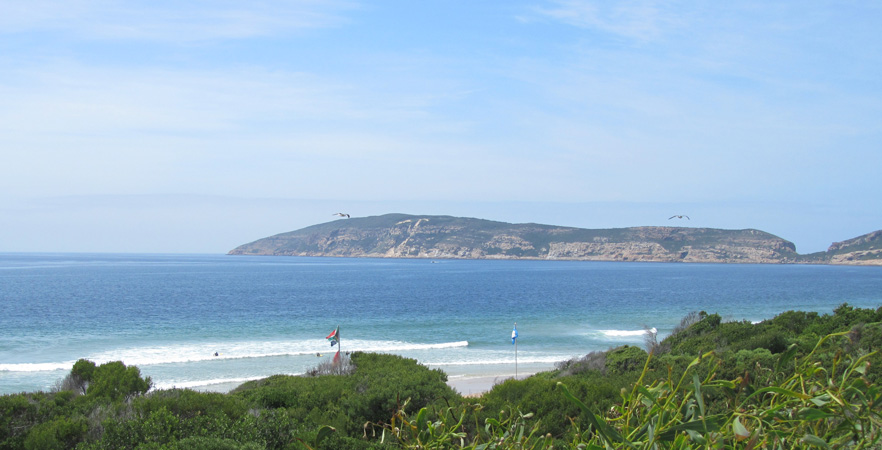
Exploring the Garden Route is a fantastic way to enjoy this amazing part of the country at weekends! Visit animal and bird sanctuaries and reserves, go whale watching, bungy jumping, sky diving, surfing and much more!
Free time during the week is spent relaxing on the terrace overlooking the park, playing games, watching TV or reading.
Climate
The project is located in the Western Cape. The warmest months are normally December to March when it gets up to around 28˚C during the day. The colder months are from May to September when daytimes are warm at around 20˚C but it can get cold at night and in the morning. The wettest months are from June to August, but there can be showers throughout the year. October to April is generally clear weather, with mostly sunny days.
Travelling in South Africa before or after your placement
South Africa is situated at the southern tip of Africa and ranges from desert to sub-tropical. With dramatic landscapes, amazing wildlife and a rich and diverse culture and interesting history, South Africa has something for everyone. Popular activities in South Africa include:
- Spotting the Big 5 (lion, leopard, elephant, rhino and buffalo) on safari
- Travelling the Garden Route
- Visiting Cape Town and sampling some of the local wines
For more information on South Africa and some of the things we loved when we visited there please see our South Africa country page. This also features all our other South Africa volunteering projects as you might like to consider combining this project with one of the others we offer to make a trip of a lifetime!
Arrival & Departure
- Start day (day to arrive at the project): Sunday, see available start dates below
- Departure day: Sunday
Durations
You can volunteer at this project for: 1 week - 12 weeks (7 nights per week).
Start dates
Start dates are every Sunday of the year.
What's Included
Included
- Dedicated Pod Volunteer specialist to support you from booking on until you complete your trip
- Comprehensive trip planning guide
- Transfers from / to George Airport
- Accommodation
- If staying 4 weeks or longer, 1 complimentary night in the Lodge
- Induction and training
- T-shirt, fleece and cap
- Support from the team onsite in South Africa
- 24/7 emergency support from the Pod Volunteer UK team
- Donation to Pod Environmental Fund tackling climate change
- 100% payment protection through ABTOT
- Volunteering certificate and reference (on request)
Not included
- Flights
- Travel insurance
- Vaccinations
- Meals
- Any tourist trips / activities you choose to do in your free time
Price table
| 1 week | £995 | GB Pounds |
| 2 weeks | £1395 | GB Pounds |
| 3 weeks | £1695 | GB Pounds |
| Extra weeks | £425 | GB Pounds |
Accommodation
The prices above are for a standard room. To upgrade to the Lodge there is a supplementary fee of approx (depending on exchange rates):
- £85 per night for a room for 1 person
- £110 per night for a room for 2 persons
Discounts
- £250 discount for each child under 16 joining with parent(s)
- £50 discount if you have previously volunteered with Pod Volunteer
Where the money goes - financial transparency
Your fee covers the overseas costs of volunteering and the costs of running our organisation in the UK, on a non-profit basis. For more details and a breakdown of our costs please click here.
Book with confidence - financial protection
All monies paid to us are financially protected through The Association of Bonded Travel Organisers Trust Limited (ABTOT).
Fees in currencies other than GBP are indicative only and volunteers are invoiced in GBP. For current exchange rates please see www.xe.com
Read volunteer reviews from the Elephant Care and Research project
Jan (parent) - 2026
“Isabel had an absolutely fantastic trip. She enjoyed her stay immensely. Her experiences with the elephants have had such a profound impact that she is reconsidering her uni option to include Zoology. She said the staff team were all very welcoming and she would have loved to extend her stay for another week or two. I would highly recommend your organisation for the effective communication and smooth running of her DofE experience.”
Carol - 2025
"I had the most amazing week and have come away with memories I will never forget as well as a zillion photo’s and videos! Definitely a trip of a lifetime.
From the day I booked until the day I returned the support from the POD team was above and beyond and made me feel safe and secure as a solo traveller.
The activities were varied and great fun. I learnt a lot about the research being done. I enjoyed time in the Lab processing samples and learning about the ways they elephants are monitored for stress levels etc. I loved being part of the research process.
Other activities included preparing wheelbarrows of chopped fruit & vegetables for the 5 female elephants, to collecting poo samples, tending to the garden/nursery and best of all being in the field for many hours observing and collecting data with the amazing herd of 5. We also had a couple of Zebra herds to identify which was a challenge but great fun.
I was in my happy place for sure and did not want to come home at the end of the week."Fergus – 2025
"I had a very great time looking after the elephants, and was able to learn some new things about the elephants. The people were very kind and I loved meeting them and then the guides as well. The activities were engaging and i was able to engage in new hands on activities. I also was able to cook for myself which I liked a lot."
Fergus – 2025
"I had a very great time looking by after the elephants, and was able to learn some new things about the elephants. The people were very kind and I loved meeting them and then the guides as well. The activities were engaging and i was able to engage in new hands on activities. I also was able to cook for myself which I liked a lot."
Mina – 2025
“This was my first time volunteering abroad alone and Pod Volunteer couldn't have been any more organised and supportive of trip to South Africa. I had the most incredible time with the elephants and made many unforgettable memories. I would definitely recommend Pod Volunteer and the Elephant Care and Research in South Africa to anyone interested in nature conservation and animals!”
Ewan – 2025
“Great and rapid communication, sent all the information and documents i needed, experience was fantastic.”
Genell
“One word says it all... AMAZING!! The elephants are just as majestic, fabulous, and gentle as portrayed on TV and the staff (guides and research team) are friendly, knowledgeable, and eager to help and ensure you have a great time!
This awesome experience made the pre-travel debacles well worth it and I'm grateful my mother talked me into to staying for three weeks.
Also the Pod volunteer handbook with the packing list, weather guide, etc... was extremely helpful and although my bag was overweight I can definitely say I was well prepared!
Again thank you for this AMAZING once-in-a-lifetime opportunity!!”
Maria
“Everything is going well here, a huge learning experience and an incredible experience. The entire team is super friendly as well as the volunteers present here! There is no doubt that the combination of sunsets and elephants is magnificent. We are really lucky! Thank you again for introducing me to this project, thank you for making this dream come true.”
Suzanne
"My experience on my placement on the South African Elephant Research project was fantastic and a truly unforgettable, inspirational experience. The people I got to meet & work alongside were so passionate & helpful, where everyone works day & night to ensure the welfare of the Elephants and other animals from the Zebras to their rescued dogs and cats.
My advise to anyone considering placement is: Go! It is such an incredible experience, and if you’re truly passionate about learning about & helping with conservation, this is the place for you."
Diana
"Having the opportunity to be part of the Elephant Care and Research team, to work with the team members, as well as with all the other wonderful volunteers, was one of the most amazing things I've done in my life.
The whole time I felt that I wouldn’t trade this experience for any other thing or place in the world. Nothing I have lived so far was more fulfilling, inspiring or gratifying than leaving my mark in the world of the most complex animals that ever walked the earth.
I am grateful for the trust and responsibility that I have been given, and I definitely plan to go back and experience more beautiful things in the very near future."
Read more reviews

24/7 support
Alex and the Pod UK team are here to help you throughout your trip
Reserve your place and start your volunteering adventure to South Africa!
BOOK NOWSIMILAR PROJECTS
Here are other popular projects you may be interested in